I Didn’t Go to the Hospital. I’m Not Sorry.

My son overdosed a few days before Christmas.
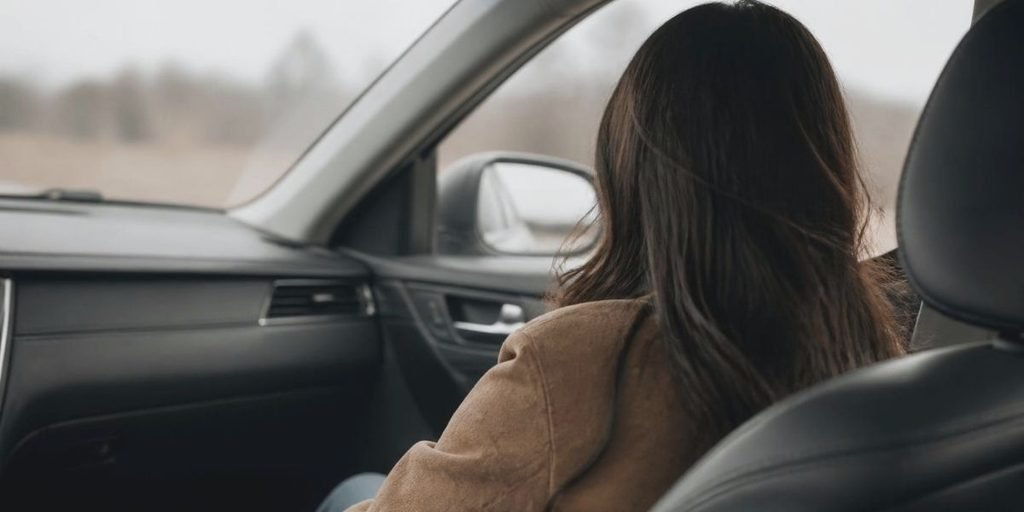
The sky was a light grey on that December day. I can still remember what I wore —my cozy lack leggings paired with a simple black tank top. Over it, one of my favorite pieces—a suede jacket in a warm camel shade, soft to the touch, adding just enough color to break the monotony.
This day my partner had a surprise for me, and for once I was not my usual anxious self about being surprised. We were headed to see Elf, a play production we’d talked about catching for years. We were about ten minutes from the theatre when my phone lit up with a text from my son’s dad.
Emergency. Call me ASAP.
I dialed right away. He answered quickly, and it didn’t take more than a word or two of hearing his tone for my body to respond. It understood before my brain did. Something was horribly wrong.
My son was on his way to the hospital. He had turned blue. He wasn’t breathing.
We turned around toward the hospital.
I instantly felt as if my body had been hijacked.
Sitting in the passenger seat, my gaze slipped from the road and settled on the floorboard, as if it had found somewhere safer to land. The vinyl there held tiny indentations—barely noticeable, the kind you’d never look at twice—but I began to cling to their shallow grooves like they were something solid, something certain. I had to keep my eyes open, fixed on something small and harmless, because my eyelids were growing heavy, tugging downward. I was convinced that if I let them close, even for a second, something irreversible would happen. If I closed my eyes, I would die.
I couldn’t find my way back to anywhere that felt safe. I felt held underwater, unable to reach the surface. I kept reaching for something inside myself that could pull me out, and there was nothing there to hold.
I understand now that this was most likely a panic attack. But knowing what to call it doesn’t change what it felt like. It felt like dying.
The whole way toward the hospital I existed in two places at once—the car, and somewhere completely outside of it. I didn’t want to get there fast. Honestly, I didn’t want to get there at all.
I couldn’t reconcile that I was possibly heading to a building where I would get out and see my dead son.
I was also overwhelmed with a conviction that my legs no longer held any capacity to hold me when I needed to get out of the car. I felt with almost certainty that they would buckle and fail to hold me once they needed to. The feeling of being suppressed and at the mercy of my body continued to terrify me.
The phone rang again as we drove toward the hospital. He was breathing.
My son had overdosed. He had turned blue and stopped breathing. A friend had Narcan. It brought him back. An ambulance took him to the hospital, confused, but alive. He was going to be okay.
For a moment I came back into reality with the knowing that my son wasn’t dying that day. I was relieved, naturally. And if I’m honest, part of that relief was because I didn’t have to do what I felt I physically could not do — get myself through the door of that hospital. My body, my mind, something in me refused to allow it.
His dad was there. He wasn’t alone. But I — his mom — did not go.
We turned the car around, and I went to the play. My body needed distance from the reality it had just been driving toward. I needed distance to feel safe and come back into myself.
While at the play I felt like I was watching myself from the outside. I rotated between moments where I saw myself being totally present — enjoying the actors on stage, their performance pulling me in — and then slipping back into a dreamlike, dissociated state where I understood the weight and magnitude of what had just occurred, but experienced it almost from above and without any ability to feel the weight or grief of it.
Afterward we went to dinner and a second wave of panic hit me there. A sweep of fear so physical I was convinced I was going to nod out and die right there in the dining room. We left quickly.
Tests later revealed cocaine laced with fentanyl. We almost lost him December 22, 2023.
Loving a child through addiction, or any path that breaks your heart slowly, will take you to the floor. Some days you don’t even try to get up. You just ask for a blanket so you can stay down there a little more comfortably. I know that floor.
There’s an unspoken contract stitched into motherhood-the belief that you will show up, no matter the cost, no matter how far past yourself you have to go. It isn’t taught, it’s absorbed, and when something catastrophic happens to your child, that instinct can pull you under before you even realize you’re drowning
Every part of you wants to be there, to override your limits. I don’t think we even understand we have limits when things like this begin. We just need to prove our love through presence alone. That’s where we start. That’s our child. We’re their mother. Nobody hands you a guide for how to live inside that kind of chaos and terror, so you just go past yourself, again and again, because what else would you do?
There are things each of us learns the further we walk this road. I still am. I’m understanding that addiction is a disease that can mimic a tornado, with such an unapologetic capacity to pull everyone in that loves the one struggling.
Understanding this has shown me that there are times when the truest form of love isn’t forcing myself deeper into something I don’t have the capacity to hold, but pausing to ask what I need and what I’m capable of. Addiction can be a long game and as a mom of someone struggling, I need to be able to go the distance. To do that, sometimes have to take shelter in the storm.
In the middle of that chaos, I was able—just barely—to listen to that quieter voice and make a choice that protected me, instead of abandoning myself entirely. The love for my child didn’t lessen in that decision; if anything, it became steadier, something I could actually sustain rather than lose myself inside of.
This event wasn’t my introduction to fear for my son. I had been living in uncertainty with him for a long time by then, learning slowly, and often painfully, how much I could carry. It’s tender, hard work, as a mother and as a person. This is a road I never wanted to be on, and having to travel it with my son makes it that much more treacherous. But if I’m going to be on it, I have to learn the terrain.
I’m thankful that learning my limits has let me be free from guilt for not going to that hospital. Thankful for the protection I was able to give myself.
The remnants of December 23rd still live deeply in me and I continue to work toward healing – toward as much peace as I can hold while standing on uncertain ground.